



Hair loss can stem from many different causes, and nutritional deficiencies are one possibility behind increased shedding or thinning. If a deficiency turns out to be behind your hair loss, correcting it may help improve growth over time. If you're looking for Hair Loss Treatment in Ahmedabad, Skin n Smile Klinic can evaluate your hair and scalp, identify what might be contributing to the problem, and guide you toward a suitable treatment plan.
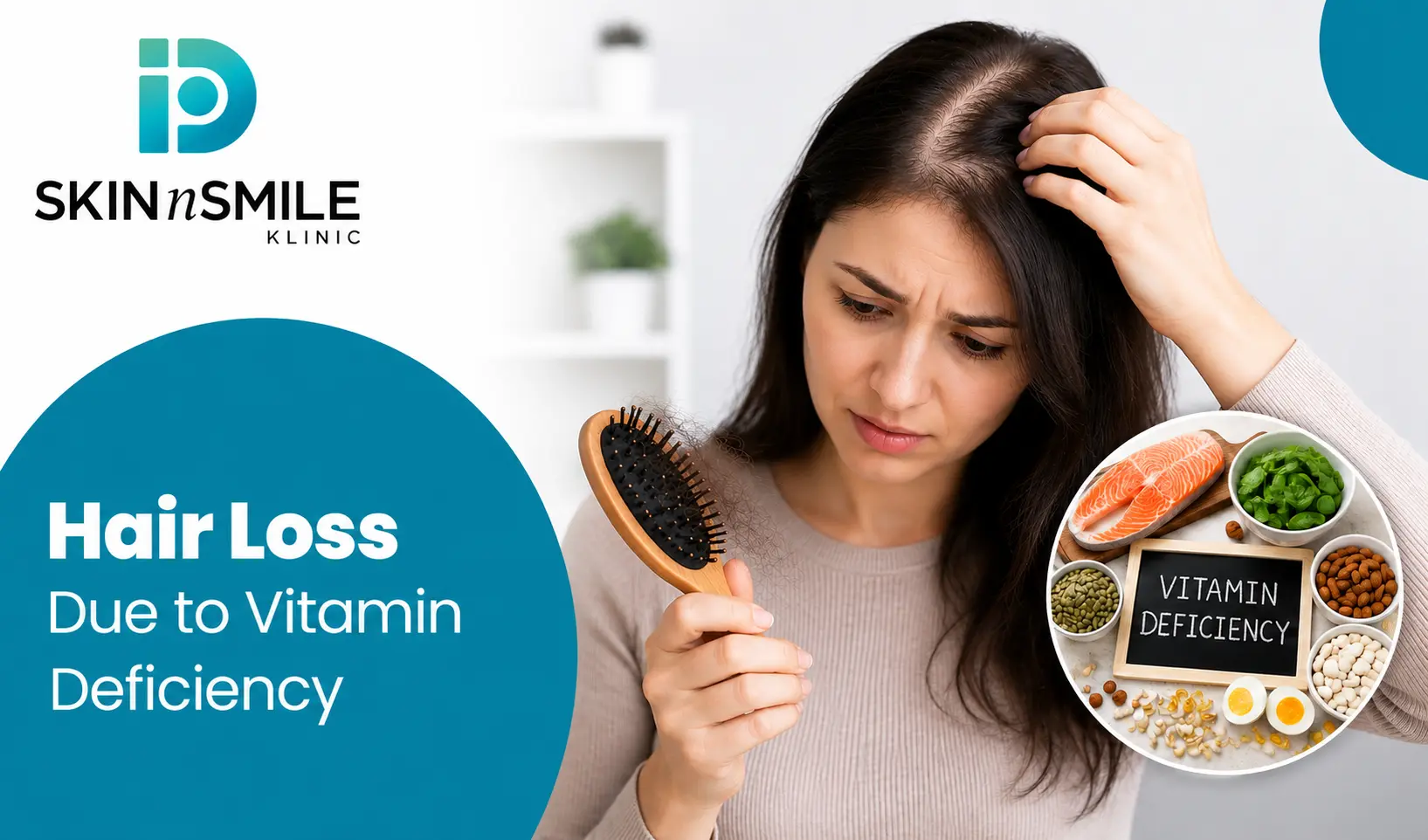
Can Vitamin Deficiency Cause Hair Loss?
Yes, certain nutritional deficiencies can contribute to hair loss, though not every case is caused by one. Low levels of nutrients like iron, vitamin B12, folate, vitamin D, zinc, or (rarely) biotin can be linked to thinning or increased shedding. Hair follicles need adequate nutrients to keep up their normal growth cycle, so when the body falls short on certain nutrients, hair growth can be affected.
Which Vitamin Deficiencies Can Cause Hair Loss?
1. Iron Deficiency
Iron deficiency is worth considering, especially when hair shedding shows up alongside tiredness, weakness, dizziness, or brittle nails. Iron deficiency anaemia can include hair loss as one of its symptoms. Iron helps the body produce haemoglobin, which carries oxygen around the body, so if levels are low, a doctor may order blood tests to check for deficiency or anaemia.
2. Vitamin D Deficiency
Vitamin D plays several roles in the body, and researchers have looked into how it connects to hair disorders. Some people with certain types of hair loss do have low vitamin D, but a low reading doesn't automatically mean that's the cause. Your doctor may recommend testing based on your symptoms, history, diet, lifestyle, and the type of hair loss you're experiencing.
3. Vitamin B12 Deficiency
Vitamin B12 supports healthy red blood cell formation and normal nervous-system function. A deficiency can cause anaemia along with symptoms like tiredness and weakness. When hair loss shows up alongside these kinds of symptoms, checking B12 levels may be worthwhile.
4. Folate Deficiency
Folate (vitamin B9) is needed for normal cell production and red blood cell formation. A severe deficiency can contribute to anaemia and other health issues. If someone has a restricted diet or another risk factor, a doctor may consider folate testing as part of the workup.
5. Zinc Deficiency
Zinc plays an important role in cell growth and tissue repair, and a significant deficiency can affect skin and hair health. That said, zinc supplements shouldn't be taken routinely for hair loss unless a deficiency is suspected or confirmed, too much zinc can cause problems of its own.
6. Biotin Deficiency
Biotin gets marketed heavily as a "hair vitamin," but true biotin deficiency is actually rare. When it does happen, it can cause thinning hair and loss of body hair. The NIH also notes there's limited evidence that biotin supplements help hair health in people who aren't actually deficient — so reaching for high-dose biotin just because you're losing hair may not be the right move.
What Causes Vitamin and Nutrient Deficiencies?
Nutritional deficiencies can develop for a number of reasons, including:
- Highly restrictive diets
- Poor overall nutrition
- Low intake of protein-rich foods
- Certain digestive or absorption problems
- Increased nutritional requirements
- Some medical conditions
- Certain medications
- Significant blood loss (in the case of iron deficiency)
A deficiency should ideally be investigated rather than assumed.
How Is Hair Loss Due to Vitamin Deficiency Treated?
The main approach is to correct the confirmed or suspected deficiency and address why it developed in the first place. Depending on the deficiency, treatment might involve dietary changes, prescribed supplements, or other medical care. Iron deficiency, for instance, may call for iron replacement once the cause and severity have been assessed — taking iron without confirming the need isn't recommended, since too much iron can be harmful.
A balanced diet should still be the foundation. Depending on dietary preferences, nutrient-rich options include:
- Lentils and beans
- Green leafy vegetables
- Eggs
- Dairy products
- Nuts and seeds
- Whole grains
- Fish or lean meats
- Fortified foods
Your dermatologist may also recommend separate hair-loss treatment if a nutritional deficiency isn't the only factor at play.
Can You Prevent Hair Loss Caused by Vitamin Deficiency?
You can lower your risk by keeping your diet varied and balanced, and avoiding unnecessary restrictive eating. Don't lean on hair supplements as a substitute for proper nutrition — most people get the nutrients they need from a balanced diet, and supplements work best when there's an actual, specific need. The NIH notes that most people get enough biotin from food alone, and that true biotin deficiency is uncommon.
Key Takeaway
Vitamin and nutrient deficiencies can contribute to hair loss, but supplements aren't a one-size-fits-all fix. The best approach is to identify the underlying cause, confirm any deficiencies where appropriate, correct them safely, and treat any additional hair-loss condition alongside that. If you're dealing with persistent hair fall, consulting a dermatologist at Skin n Smile Klinic can help you understand why it's happening and choose an evidence-based path forward, call 91040 44040 today.