



Male pattern baldness is one of the most common causes of hair loss in men. It can show up as a receding hairline, thinning at the crown, or hair that just gradually feels less dense. If you're noticing any of these changes, Male Baldness Treatment in Ahmedabad can help pin down the cause and figure out whether medication, lifestyle changes, or a hair transplant makes sense for you. Catching the condition early tends to make it easier to manage and to protect the hair you still have.
What Is Male Pattern Baldness?
Male pattern baldness, medically known as androgenetic alopecia, is a hereditary form of hair loss. It happens when hair follicles become sensitive to a hormone called dihydrotestosterone (DHT).
Over time, the affected follicles shrink and start producing thinner, shorter hairs. Eventually, some stop producing visible hair altogether.
The condition usually follows a fairly predictable pattern, though how fast it progresses and how much hair is lost varies from person to person.
What Causes Male Pattern Baldness?
Genetics and DHT sensitivity are the main drivers here. Your risk is higher if close male relatives have dealt with early or extensive hair loss, and it's worth knowing that both your mother's and father's side of the family can pass on this genetic risk.
A few other things can make existing hair loss worse or trigger additional shedding:
- Age-related changes
- Significant stress
- Nutritional deficiencies
- Certain medical conditions
- Hormonal changes
- Some medications
- Smoking and poor lifestyle habits
None of these directly cause male pattern baldness, but they can add to overall thinning.
Early Signs of Male Pattern Baldness
Spotting the early changes can help you get evaluated sooner rather than later. Common signs include:
- Receding hairline, particularly around the temples
- Thinning hair at the crown
- Scalp becoming more visible
- A widening area of thinning
- Hair strands that feel smaller or finer than before
- A gradual drop in overall hair density
Some men start noticing this in their late teens or twenties; others don't see real changes until much later.
Male Pattern Baldness Stages
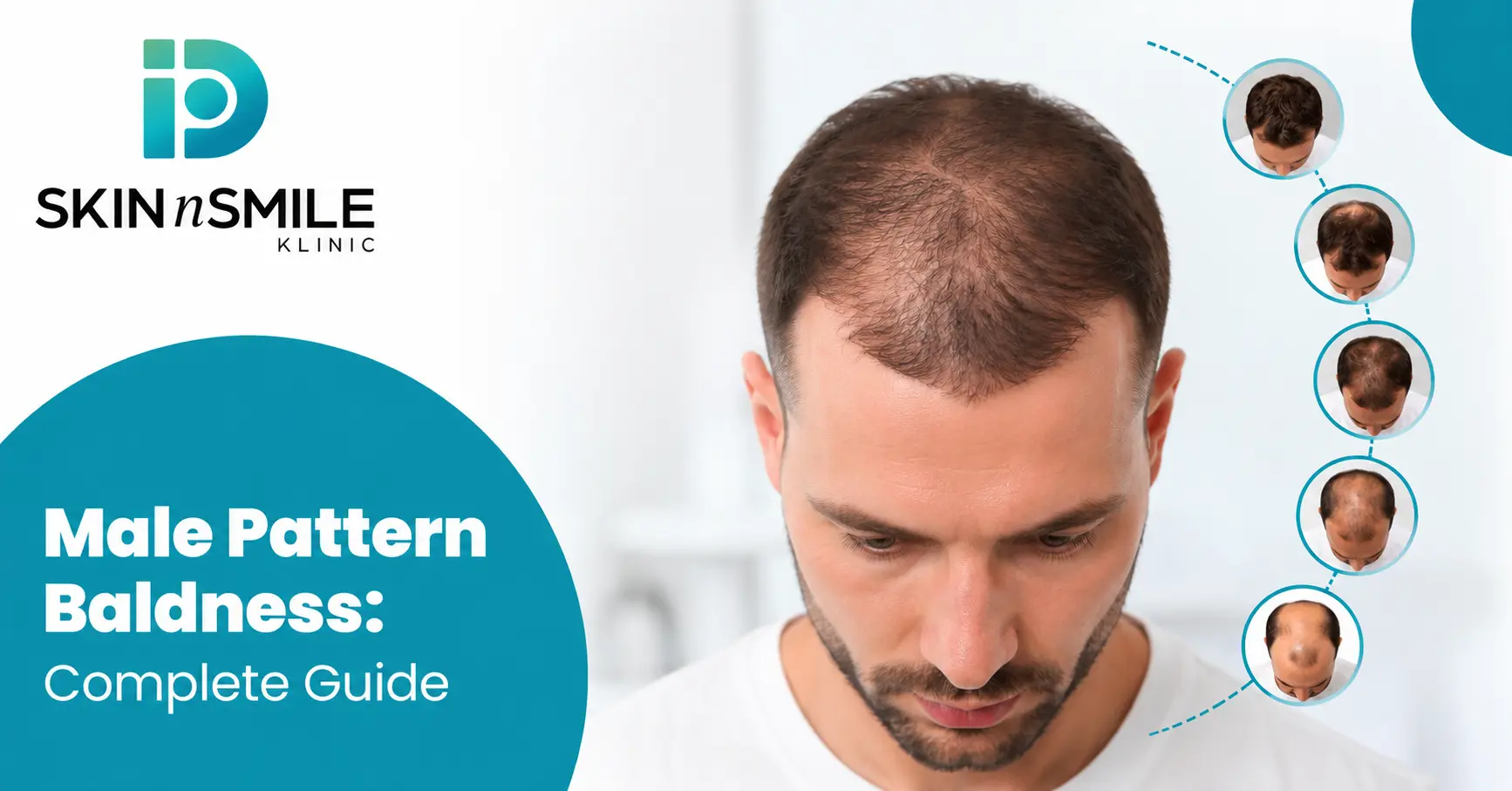
The Norwood-Hamilton scale is the standard way to describe how male pattern baldness progresses.
| Stage | Typical Pattern |
|---|---|
| Norwood 1 | Little or no significant hairline recession |
| Norwood 2 | Mild recession around the temples |
| Norwood 3 | More noticeable temple recession |
| Norwood 4 | Significant recession with crown thinning |
| Norwood 5 | Larger areas of hair loss, less separation between hairline and crown |
| Norwood 6 | Extensive loss across the front and crown |
| Norwood 7 | Advanced hair loss with limited hair remaining on the scalp |
The stage alone doesn't tell you which treatment is right. Hair quality, how much donor hair is available, age, family history, and the likely future course of hair loss all factor in too.
Male Pattern Baldness Treatment Options
What works best depends on the stage and cause of the hair loss, along with what the person actually wants out of treatment.
1. Medical Treatment
Certain medicines can slow hair loss and, for some men, even improve regrowth. These are prescription medications with possible side effects, so they should only be used after talking through the risks and benefits with a qualified doctor.
2. Hair Transplant
A transplant may be worth considering once follicles have been permanently lost and there's enough donor hair to work with. During the procedure, healthy follicles are typically taken from a donor area and moved to the areas affected by hair loss. Techniques like Follicular Unit Extraction (FUE) can produce a natural-looking hairline in the hands of an experienced surgeon. Keep in mind a transplant won't stop future loss in untreated follicles, so it's worth thinking ahead.
3. Supportive Treatments
Depending on what's going on, a specialist might suggest supportive measures, scalp care, correcting a confirmed nutritional deficiency, or other clinically appropriate options. Treatment should be based on the actual cause, not on ads promising instant regrowth.
Can Male Pattern Baldness Be Prevented?
Genetic male pattern baldness can't always be fully prevented, but getting assessed early can help slow things down in the right candidates. A few things that support healthy hair:
- Eating a balanced diet with enough protein
- Managing ongoing stress
- Avoiding unnecessary chemical or heat damage
- Treating scalp conditions promptly
- Avoiding smoking
- Seeing a doctor once hair loss becomes noticeable
It's best not to take supplements unless a deficiency has actually been confirmed, too much of some nutrients can do more harm than good.
When Should You See a Hair-Loss Specialist?
It's worth getting a professional evaluation if you notice rapid hair loss, significant recession, crown thinning, patchy bald spots, itching or scalp inflammation, or hair loss earlier than you'd expect for your age. An early assessment can tell you whether it's male pattern baldness or something else, and point you toward the options that fit your situation.
Final Takeaway
Male pattern baldness is common, but that doesn't mean progressive hair loss should be ignored. Catching the pattern early makes it easier to weigh your options, from medication to hair restoration. If you're looking into male baldness treatment in Ahmedabad , start with a thorough scalp and hair assessment at Skin n Smile Klinic, or call 91040 44040 to book your slot, rather than choosing a treatment based on ads or before-and-after photos.