



Ageing is another common cause of hair loss. Others lose hair, often in a family history of baldness, and others find that it falls out due to stress or hormonal changes, medical conditions, and age. Many people nowadays use additional medicines to regrow their hair and boost their self-esteem. One of the commonly mentioned treatments is Hair Transplant treatment in Ahmedabad , which involves various transplant approaches based on the patient's condition and hair type.
What Is a Hair Transplant?
A hair transplant is a surgical procedure that requires a physician with surgical training. Hair follicles are generally taken from the back or sides of the scalp, an area in which hair exhibits finer growth.
Then, the hair follicles transplanted are placed in areas of alopecia or thinning. Over time, the implanted hair will grow normally.
Hair transplant procedures are rationally utilised for:
• Male pattern baldness
• Receding hairline
• Patchy beard growth
• Thin eyebrows
• Injury or burn-related hair loss
The procedure is usually performed under local anaesthesia, which means that the scalp gets numb during treatment.
How Does Hair Transplant Work?
Hair follicles are small histological and anatomical architectural structures that form under the dermis of the skin and produce hair. The transplant is the only process that takes individual healthy follicles and gently moves them from one part of your scalp to other locations with tissue where it is needed most for hair growth.
After the process, these follicles graft themselves in their new spot and begin to produce hair slowly over time. It may take several months for hair to grow again, as it grows slowly.
The selection of transplantation depends on the following:
• Hair loss pattern
• Donor hair quality
• Scalp condition
• Hair density required
• Patient expectations
Types of Hair Transplant
Different hair transplant methods are available today. Each method has its own process and benefits.
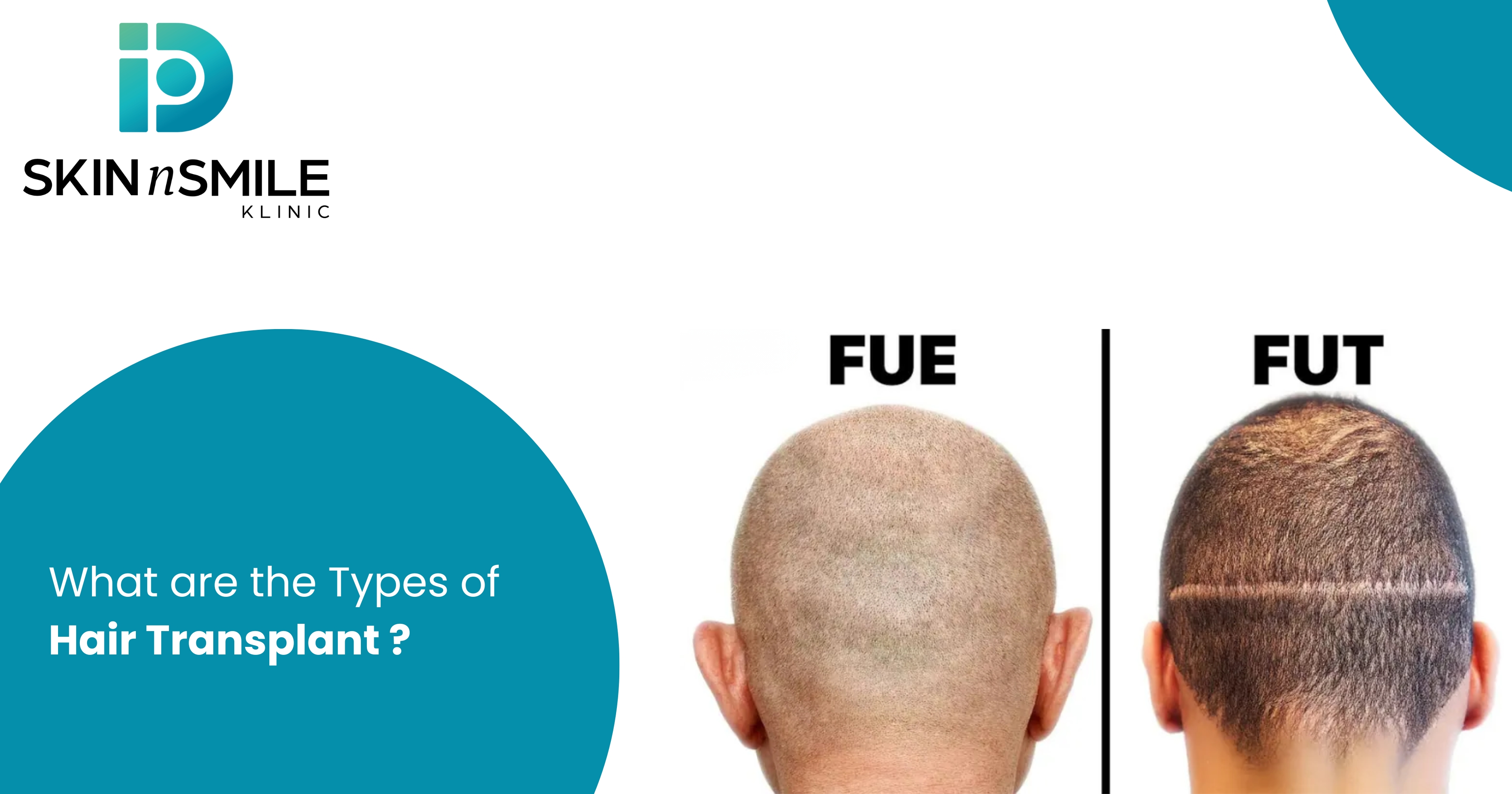
1. Follicular Unit Extraction (FUE)
Follicular Unit Extraction, commonly known as FUE, is one of the most popular hair transplant methods.
Individual hair follicles are plucked one at a time from the donor region using a little medical instrument. The follicles are then implanted in the bald or thinning region.
Advantages of FUE
• Leaves are less visible and have very small scars
• Healing time is usually faster
• Suitable for people who keep short hairstyles
• Less discomfort after the procedure
• Can provide natural-looking hair growth
FUE is often preferred because it does not involve a large cut on the scalp.
2. Follicular Unit Transplantation (FUT)
Follicular Unit Transplantation, also called FUT or strip surgery, is another commonly used technique.
In this method, a strip of scalp containing healthy hair follicles is removed from the donor area. The follicles are then separated carefully and implanted into the recipient area.
Advantages of FUT
• Can transplant a large number of grafts in one session
• May provide good hair density
• Often suitable for advanced hair loss
• Grafts are prepared carefully under magnification
• Useful for covering larger bald areas
FUT may leave a thin linear scar on the donor area, but it is still used in many cases.
3. Direct Hair Implantation (DHI)
Direct hair implantation is a newer technique related to FUE. It uses a special implantation tool called a Choi pen.
Hair follicles are removed individually and directly implanted into the scalp without making separate cuts beforehand.
Advantages of DHI
• Better control over hair direction and angle
• Helpful for detailed hairline design
• No separate incision step
• Precise placement of hair follicles
• Reduced handling of grafts during implantation
DHI is often used for people who want more detailed hairline work.
4. Robotic Hair Transplant
Robotic hair transplantation includes the use of computer-assisted technologies to remove hair.
It assists in locating healthy follicles and aids in precise extraction under controlled medical conditions.
Advantages of Robotic Hair Transplant
• Improved precision during extraction
• Consistent graft selection
• Reduced manual error
• Technology-assisted process
• May do a better job on accuracy in samples
This approach is offered in specific clinics rather than for all patients.
Which Hair Transplant Method Is Best?
One method is not the best for everyone. The best treatment for you will depend on your scalp condition, hair structure, degree of baldness, and expectations.
For example:
• FUE, which we commonly use when patients want to avoid a big scar.
• FUT can be beneficial with higher graft numbers needed
• DHI may be applicable for artistic hairline work
You should consult a doctor before choosing any method of treatment.
Final Thoughts
There are various types of hair transplant procedures that have evolved over the years to address different forms of hair loss. Different types of hair transplants can help an individual get a clearer idea of the approach and results of the treatment.
For those who seek hair transplant treatment in Ahmedabad, often visit Skin n Smile Klinic and learn which option will suit your needs and the condition of your hair. You can also call 9104044040 to get information from home.