



Hair loss rarely happens overnight. It often starts with subtle changes that are easy to ignore, a few extra strands on your pillow, a widening hair part, or a hairline that seems slightly higher than before. Whether you need medication, PRP therapy, or eventually a Hair Transplant in Ahmedabad, identifying the problem early can help preserve your natural hair and confidence.
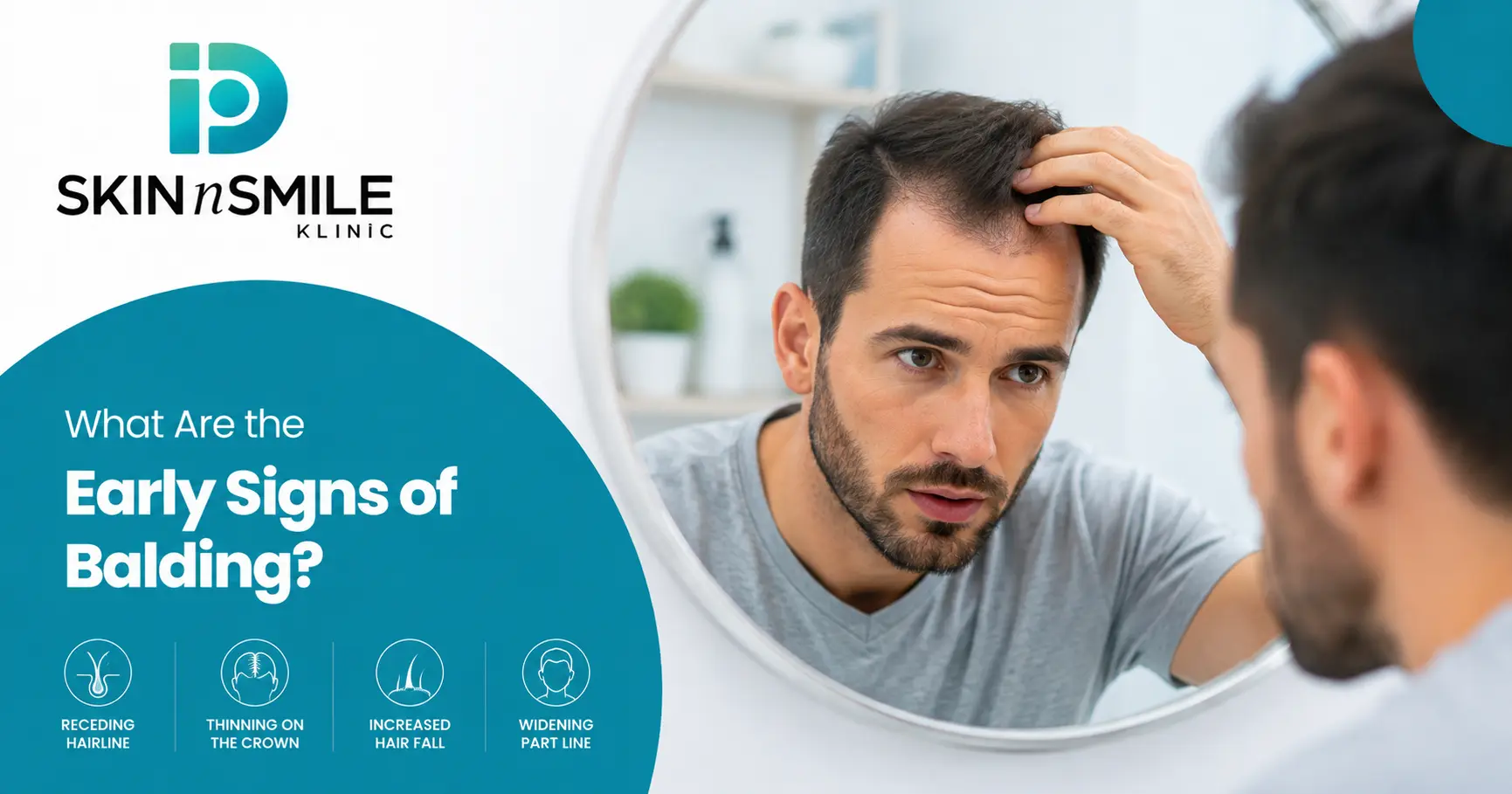
Is Hair Fall Normal or Are You Going Bald?
One of the biggest misconceptions is that every strand of hair in your comb means you're going bald. In reality, the hair growth cycle naturally includes a shedding phase, and it's normal to lose up to 100 hairs a day.
The concern begins when new hair doesn't replace the hair you're losing. Over time, hair follicles shrink, producing finer, weaker strands until they stop growing altogether. This gradual process is called hair follicle miniaturisation, and it's one of the earliest indicators of pattern baldness.
Early Signs of Balding at a Glance
| Sign | What You May Notice | Should You Be Concerned? |
|---|---|---|
| Increased Hair Shedding | More hair while washing or combing | If it continues for several weeks |
| Receding Hairline | Hairline slowly moves backwards | Yes |
| Crown Thinning | Scalp becomes visible at the top | Yes |
| Widening Hair Part | Common in women | Yes |
| Reduced Hair Density | Hair feels thinner than before | Yes |
| Fine or Weak Hair | Hair strands become thinner over time | Monitor closely |
10 Early Signs of Balding You Shouldn't Ignore
Hair loss doesn't look the same for everyone. However, these are some of the most common warning signs.
1. Your Hairline Is Slowly Moving Back
A receding hairline is often the first noticeable symptom of male pattern baldness. The temples begin moving backwards, creating an “M-shaped” hairline.
2. You're Losing More Hair Than Usual
Finding large amounts of hair on your pillow, bathroom floor, or shower drain regularly could indicate excessive shedding rather than normal hair fall.
3. The Crown of Your Head Looks Thinner
Many people first notice hair loss when the scalp becomes visible around the crown. Friends or family often notice this area before you do.
4. Your Hair Doesn't Feel as Thick
If your ponytail feels smaller, your hairstyle looks flatter, or your hair lacks volume, decreasing hair density could be the reason.
5. Your Parting Appears Wider
Women commonly experience gradual thinning along the centre part rather than a receding hairline. A wider part is often one of the earliest signs of female pattern hair loss.
6. Your Hair Strands Feel Finer
Healthy hair follicles produce thick strands. When follicles begin shrinking, new hairs grow back thinner and weaker, making your hair appear less dense.
7. You Can See More of Your Scalp
If bright lighting makes your scalp more visible than before, it could indicate progressive thinning rather than temporary hair shedding.
8. Hair Takes Longer to Grow
Miniaturised follicles often produce slower-growing hair. You may notice your haircut lasts longer simply because your hair isn't growing at its usual rate.
9. Bald Patches Start Appearing
Round or irregular bald patches should never be ignored. While they may be caused by pattern baldness, they can also result from medical conditions such as alopecia areata and should be evaluated promptly.
10. Hair Loss Runs in Your Family
Genetics remains the most common cause of hair loss. If your parents or close relatives experienced early balding, your chances of developing androgenetic alopecia are higher.
Male Pattern Baldness
Male pattern baldness, medically known as androgenetic alopecia , affects millions of men worldwide and usually develops gradually. It commonly starts with a receding hairline or thinning at the crown before progressing to more noticeable hair loss.
Common signs include:
- Receding temples
- M-shaped hairline
- Thinning crown
- Gradual loss of hair density
- Family history of baldness
The earlier treatment begins, the better the chances of slowing progression and preserving existing hair.
Female Pattern Hair Loss
Hair loss in women is often less obvious but equally distressing. Instead of developing bald patches, women usually notice overall thinning across the top of the scalp and a gradually widening part.
Common causes include hormonal changes, genetics, menopause, PCOS, thyroid disorders, nutritional deficiencies, and chronic stress.
Signs women should watch for:
- Widening center part
- Reduced hair volume
- Increased hair fall during brushing
- Difficulty styling due to thinning hair
- More visible scalp under bright light
Seeking professional advice early can help preserve natural hair and reduce further thinning.
Ludwig Scale Explained
Unlike men, women usually experience diffuse hair thinning rather than a receding hairline. Hair specialists use the Ludwig Scale to assess the severity of female pattern hair loss and recommend suitable treatment.
| Ludwig Stage | Hair Loss Pattern | Recommended Treatment |
|---|---|---|
| Stage I | Mild thinning along the hair part | Hair care, PRP, medications |
| Stage II | Noticeable thinning with visible scalp | Combination therapy |
| Stage III | Advanced thinning across the top of the scalp | Hair restoration consultation |
What Causes Balding?
Balding isn't caused by just one factor. In many cases, it's the result of a combination of genetics, hormones, lifestyle, and overall health.
Some of the most common causes include:
- Genetics: The leading cause of male and female pattern baldness.
- Hormonal changes: DHT, menopause, thyroid disorders, and PCOS can contribute to hair thinning.
- Stress: Physical or emotional stress may trigger temporary hair shedding.
- Poor nutrition: Deficiencies in iron, protein, vitamin D, and zinc can affect healthy hair growth.
- Medical conditions: Autoimmune diseases, scalp infections, and certain medications may lead to hair loss.
- Ageing: Hair naturally becomes thinner with age.
Identifying the underlying cause is essential before starting any treatment.
Norwood Scale Explained
Doctors use the Norwood Scale to classify the progression of male pattern baldness and determine the most appropriate treatment.
| Norwood Stage | Hair Loss Pattern | Common Treatment Approach |
|---|---|---|
| Stage 1 | Little or no hair loss | Observation and scalp care |
| Stage 2 | Mild temple recession | Medical management |
| Stage 3 | Noticeable receding hairline | PRP or medication |
| Stage 4 | Crown thinning with frontal recession | Hair restoration consultation |
| Stage 5 | Hairline and crown begin to connect | Hair transplant may be considered |
| Stage 6 | Significant hair loss on the top | Advanced hair restoration |
| Stage 7 | Hair remains mainly on the sides | Comprehensive transplant planning |
Understanding your Norwood stage helps your hair specialist recommend the most effective treatment rather than relying on guesswork.
Don't Ignore the Early Signs of Balding
The sooner you recognise the signs of hair loss, the more options you have to protect and restore your hair. Whether you're noticing a receding hairline, thinning crown, or increased hair shedding, seeking expert advice early can make a significant difference.
At Skin n Smile Klinic, our experienced team provides personalised hair loss assessments and advanced treatment options tailored to your needs. From non-surgical therapies to hair transplants in Ahmedabad, we'll help you choose the right path toward healthier, fuller-looking hair.
Ready to take the first step? Book your consultation today by calling 91040 44040 and get expert guidance before hair loss progresses further.