



A hair transplant is a surgical procedure, but recovery is usually manageable as long as you follow your surgeon's aftercare instructions. If you're considering a Hair Transplant in Ahmedabad, knowing what to expect afterwards can help you prepare for temporary swelling, scabs, shedding, and the gradual return of new growth. Recovery doesn't end when you leave the clinic, proper washing, sleeping, exercise, diet, and scalp care all play a part in protecting the newly transplanted grafts.
What Is the Hair Transplant Recovery Timeline?
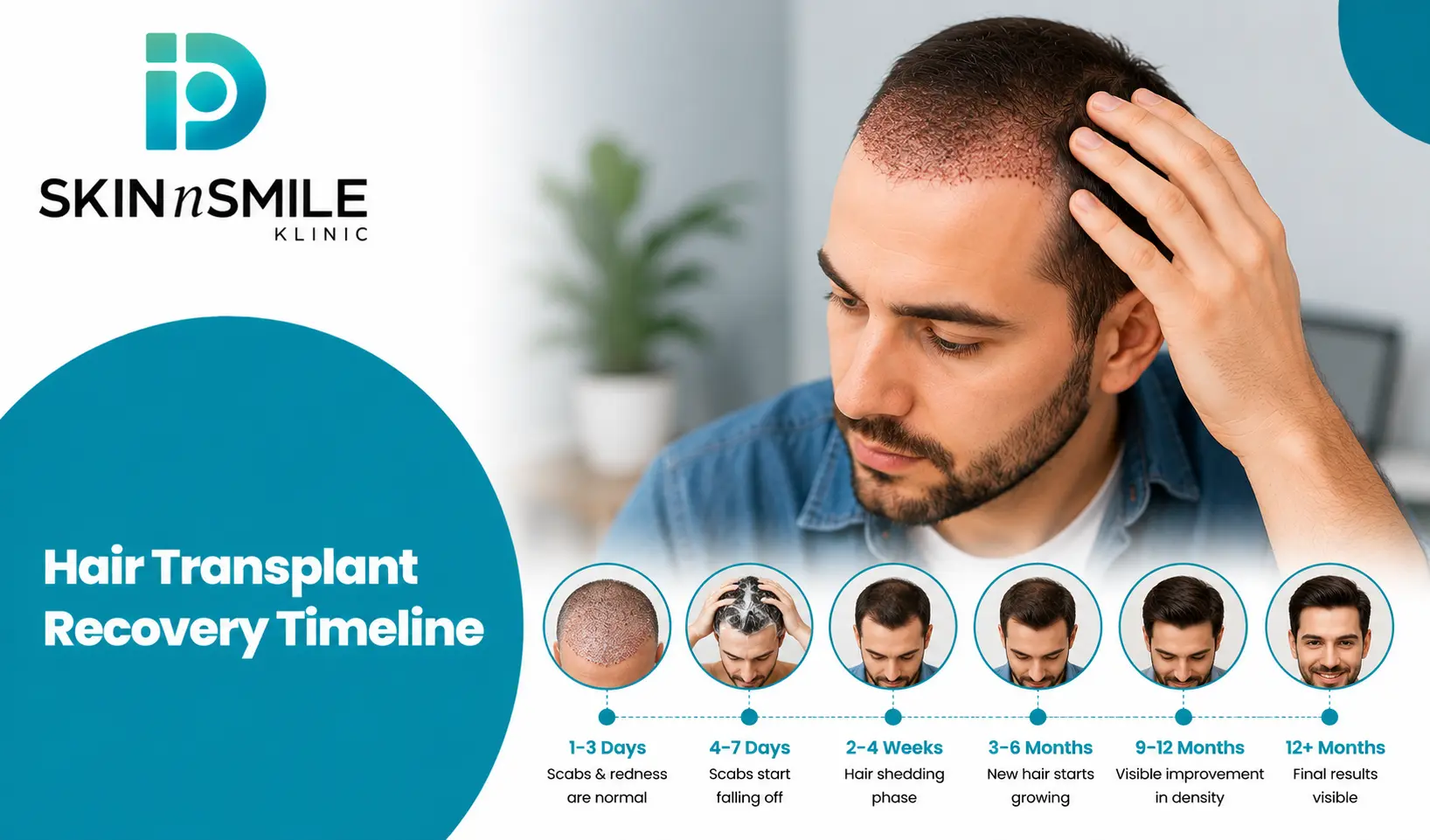
Most people can get back to light daily activities within a few days, but full hair growth takes several months. The scalp may look red, swollen, or scabbed during the first few weeks, and the transplanted hair can shed temporarily before new growth kicks in.
Here's a general timeline:
| Recovery Period | What Usually Happens |
|---|---|
| Days 1–3 | Mild swelling, redness, tenderness, and sensitivity may occur |
| Days 4–7 | Scabs develop around grafts and gradually begin to dry |
| Week 2 | Most visible scabbing improves; transplanted hairs may begin shedding |
| Weeks 3–8 | Temporary shock loss can occur |
| Months 3–4 | Early new hair growth may become noticeable |
| Months 5–6 | Hair growth becomes more visible and density gradually improves |
| Months 7–9 | Continued thickening and maturation |
| Months 10–12+ | Results continue to mature; the exact timeline varies |
Your surgeon's instructions should always take priority over any general timeline, since recovery depends on the technique used, number of grafts, scalp condition, and individual healing.
Hair Growth Timeline After a Hair Transplant
One of the most important things to keep in mind is that results come gradually.
First Week
The transplanted follicles are settling into their new spots. Redness, mild swelling, tenderness, and small scabs are all normal. Avoid touching, rubbing, scratching, or picking at the recipient area unless your surgeon specifically tells you to.
Weeks 2–4
The transplanted hair shafts may start to shed. It can look alarming, but shedding of the visible hair doesn't necessarily mean the follicle itself has been lost.
Months 2–3
This period often feels like little is happening visibly. Some patients experience shock loss during this stretch.
Months 3–6
New growth may gradually start showing. At first, the hairs can be fine, light, or uneven.
Months 6–9
Growth and density usually become more noticeable as the transplanted hairs mature.
Months 9–12 and Beyond
Results keep improving as the hair shafts thicken and mature — some patients continue seeing changes even past the 12-month mark.
Hair Wash After Hair Transplant
When you're cleared to wash your hair depends on your surgeon's instructions and the technique used. Your clinic may have you wait a specific period before washing the recipient area, and once washing is allowed, the scalp needs gentle handling.
General precautions:
- Use the cleanser or shampoo your surgeon recommends
- Avoid vigorous rubbing of the transplanted area
- Don't scratch or pick at scabs
- Let water flow gently over the scalp rather than using strong pressure
- Pat the area dry instead of rubbing with a towel
- Avoid very hot water
- Don't follow a generic online washing schedule if your surgeon has given you different instructions
Diet After Hair Transplant
There's no special food that instantly speeds up transplanted hair growth, but good nutrition supports normal healing and healthy growth overall.
After your procedure, focus on a balanced diet with:
- Adequate protein
- Vegetables and fruits
- Whole grains
- Healthy fats
- Iron-rich foods
- Zinc-containing foods
- Enough fluids
Protein matters especially here, since hair is mostly made of keratin, a protein. If you have a known nutritional deficiency, your doctor may recommend appropriate treatment — avoid taking high-dose supplements without medical advice.
What Is Shock Loss After a Hair Transplant?
Shock loss is temporary shedding that can happen after a hair transplant or other forms of scalp stress. It can affect transplanted hairs and, sometimes, existing non-transplanted hair nearby.
It can make the scalp look thinner for a while, but that doesn't necessarily mean the transplant has failed — the follicles may still be healthy beneath the scalp even as the visible hair sheds, with new growth developing as the follicle returns to its normal cycle. That said, persistent or severe hair loss should be discussed with your surgeon, since not every type of post-transplant shedding is shock loss.
Scab Removal Guide After Hair Transplant
Small scabs around transplanted follicles are common in early healing. Don't pick, scratch, peel, or forcibly remove them. Your surgeon may suggest a specific washing technique to help soften and gradually clear them once the grafts are secure enough.
General precautions:
- Follow the washing instructions your clinic gives you
- Use only recommended products
- Avoid scratching with your fingernails
- Don't pull at individual scabs
- Let scabs loosen naturally
- Contact your clinic if you notice excessive bleeding, increasing pain, pus, or signs of infection
Exact timing for scab removal varies, so stick to your surgeon's instructions.
What Should You Avoid After a Hair Transplant?
During early recovery, steer clear of anything that could disturb the grafts or irritate the scalp. Depending on your surgeon's instructions, this may include:
- Scratching or rubbing the scalp
- Direct sun exposure
- Heavy exercise
- Swimming
- Contact sports
- Tight headwear
- Hair colouring or chemical treatments
- Smoking and alcohol
- Unapproved hair products
Your doctor will likely ease these restrictions gradually as your scalp heals.
Key Takeaway
If you're considering a hair transplant in Ahmedabad, at Skin n Smile Klinic, personalised aftercare matters just as much as the procedure itself. Understanding the recovery timeline helps set realistic expectations, so temporary shedding, scabs, or slow growth don't cause unnecessary worry. You can also call 91040 44040 to book your appointment.