



A hair transplant is a surgical hair-restoration procedure that moves healthy hair follicles from a donor area into places affected by permanent hair loss. If you're considering a Hair Transplant in Ahmedabad, walking through the procedure step by step can help you know what's actually coming before, during, and after treatment.
What Is a Hair Transplant?
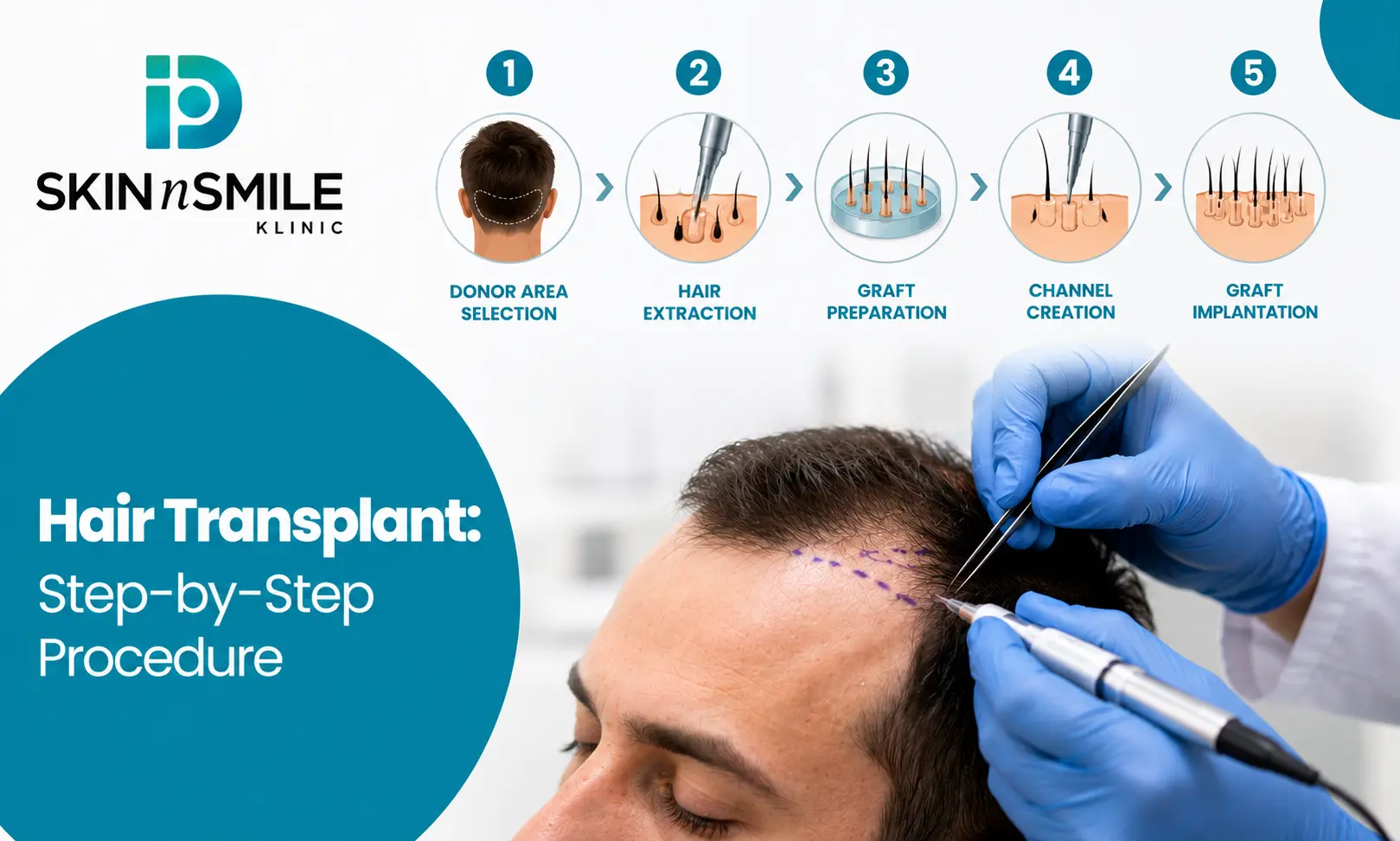
A hair transplant involves removing healthy follicles from a donor area and placing them where hair has been lost or thinned significantly.
The donor area is usually the back or sides of the scalp, since these follicles tend to hold up better against the hormonal effects behind androgenetic hair loss.
Step 1: Hair and Scalp Consultation
Everything starts with a detailed consultation.
Your doctor may look at:
- Current hair-loss pattern
- Hairline and crown
- Donor hair density
- Hair thickness
- Scalp condition
- Family history
- Previous hair-loss treatments
- Medical history
- Expectations and desired coverage
A close examination also helps figure out whether the hair loss is androgenetic alopecia or something else entirely. This step matters because, frankly, not every type of hair loss needs a transplant.
Step 2: Diagnosing the Cause of Hair Loss
Before any surgery, the cause needs to be nailed down.
Common causes:
- Male pattern baldness
- Female pattern hair loss
- Certain types of alopecia
- Previous trauma or surgery
- Some forms of scarring hair loss
If it turns out the hair loss is temporary or treatable, addressing that underlying issue might make more sense than jumping straight to surgery. Depending on your symptoms, your doctor may suggest a scalp exam, dermoscopy, or blood work.
Step 3: Evaluating the Donor Area
The donor area is honestly one of the most important pieces of transplant planning.
Doctors look at:
- Hair density
- Hair calibre
- Follicular-unit quality
- Available donor supply
- Scalp characteristics
- Previous extraction or transplant procedures
The idea is to use donor hair carefully since the supply is limited. Overharvesting can leave visible thinning in the donor area and shrink your options for any future procedures.
Step 4: Hairline Design
This is arguably the most important aesthetic stage of the whole procedure.
A natural hairline takes into account:
- Age
- Facial proportions
- Existing hairline
- Hair-loss pattern
- Donor availability
- Future hair loss
A hairline set too low or too straight can end up looking off as the patient ages. Surgeons often mix different graft types to create a softer transition up front with more density behind it.
Step 5: Preparing for the Procedure
Before the day itself, the clinic will give you instructions tailored to your situation. These might cover:
- Medication instructions
- Washing the scalp
- Avoiding certain medications or supplements if advised
- Avoiding alcohol or smoking around the procedure
- Arranging transportation if required
- Eating according to the clinic's instructions
Don't stop any prescribed medication without checking with your doctor first.
Step 6: Local Anaesthesia
Hair transplants are generally done under local anaesthesia. It numbs the treatment area so the procedure can happen while you stay comfortable, you'll likely remain awake the whole time. The exact anaesthetic approach and medication should be something you discuss directly with the treating team.
Step 7: Graft Preparation and Handling
Once extracted, grafts get examined and prepped for implantation — often sorted by things like:
- Number of hairs per follicular unit
- Quality
- Size
- Intended placement area
This handling step matters a lot. Excessive drying, crushing, or other trauma can hurt graft survival.
Step 8: Preparing the Recipient Area
Once grafts are ready, it's time to prep the recipient area. In conventional FUE, small recipient sites or channels get created before the grafts go in. These sites determine:
- Direction
- Angle
- Orientation
- Distribution
- Density
Getting this placement right is essential for growth that actually looks natural.
Step 9: Graft Implantation
The extracted follicles get carefully placed into the recipient area. With DHI-style implantation, a specialised pen may place grafts directly into the scalp instead.
The surgeon works with the natural direction and angle of your existing hair — the goal is a gradual, natural-looking transition rather than every graft sitting at the same angle.
FUE vs DHI During the Procedure
| Feature | FUE | DHI |
|---|---|---|
| Follicle extraction | Individual extraction | Individual extraction |
| Recipient-site preparation | Usually created before implantation | Implantation pen can create the site and place the graft |
| Implantation | Grafts placed into prepared sites | Grafts placed using an implantation device |
| Hairline precision | High | High |
| Suitable for | Various hair-loss patterns | Selected patients and treatment goals |
| Procedure time | Varies | May take longer depending on the case |
Neither technique automatically wins for every patient, the surgeon's expertise and how well the treatment is planned matter more than the tool itself.
Step 10: Immediate Post-Procedure Care
Right after the procedure, the scalp may look:
- Red
- Swollen
- Tender
- Slightly bruised
- Covered with small scabs
Your clinic should walk you through:
- Washing
- Sleeping position
- Medications
- Physical activity
- Sun exposure
- Scalp protection
- Follow-up appointments
Avoid touching, scratching, or rubbing the transplanted area unless your doctor tells you otherwise.
Step 11: Hair Transplant Recovery
Recovery unfolds gradually.
| Time | Typical Recovery Changes |
|---|---|
| Days 1–3 | Tenderness, redness, and swelling may occur |
| Days 4–7 | Scabs develop around grafts |
| Week 2 | Scabbing generally begins to improve |
| Weeks 2–8 | Transplanted hair may shed |
| Months 3–4 | Early new growth may become visible |
| Months 5–6 | Density gradually improves |
| Months 7–9 | Hair continues thickening |
| Months 9–12+ | Results continue to mature |
Recovery isn't identical for everyone, so let your surgeon's specific instructions take priority over this general timeline.
Final Takeaway
A hair transplant is a lot more than extracting and implanting follicles. Diagnosis, donor-area assessment, hairline design, graft handling, precise implantation, and long-term planning all shape how the final result turns out.
If you're considering a hair transplant in Ahmedabad, start with a professional consultation to see whether transplantation actually fits your stage of hair loss. At Skin n Smile Klinic, a personalised treatment plan can help you understand the procedure, expected recovery, and realistic results before you decide. You can Call on 91040 44040 to book your appointment.